A genital yeast infection is a big and common problem among women, but did you know that men can also get them? This is especially true for a man whose wife is suffering from one, since having sex will pass the infection back and forth. For a woman, however, the problem is a little trickier, since yeast thrives in a dark, moist environment. Simply put, a vaginal yeast infection is where yeast would consider it's dream home!
Many women and men suffering from genital yeast infections resort to the remedies found in a drug store: creams, suppositories, and other "medical" remedies. The problem with these is that they tend to help for only a short period of time and then the yeast comes back with a vengeance. In my experience, there are other, more effective ways to combat this insidious infection. There are all different kinds of natural yeast infection remedies out there, and I will attempt to highlight some that have worked for most people.
Here are some natural remedies for yeast infection that have worked:
Plain Yogurt
The friendly bacteria in plain yogurt helps control yeast, and yogurt can be used both internally and externally. However, you should be sure you buy PLAIN UNSWEETENED yogurt. Since sugar feeds yeast, it's like throwing gasoline on a fire...so this is a crucial point. You can also make your own, using a yogurt starter. It is pretty simple and the results are quite good. The advantage is that you can use other types of milk, such as soy or almond. Whether purchased or homemade, yogurt is a great thing to eat before meals because it provides "good bacteria" for your intestines to aid in digestion.
For a topical treatment, you can also dip a tampon in plain yogurt and insert it into your vagina or simply rub some on the outside. However, leaving it on for a prolonged period tends to have the opposite effect. It seems that once it has done its job, it is best to wipe it off or your vaginal yeast infection symptom of ithching will be more intense due to the moisture.
Garlic
One of the biggest enemies of yeast is garlic! This is one of the most effective natural remedies for yeast infection for instant relief. Inserting one garlic tab (such as Shaklee's Garlic Tabs) or a garlic clove into the vagina every few hours or as needed provides soothing relief. If you use garlic tabs, be sure the ingredients are natural and pure. Shaklee garlic tabs are highly recommend for this purpose. Of course, garlic can be taken internally, as well. Again, the Shaklee garlic tabs work great.
Kyolic garlic tabs and liquid garlic also have shown good results against a . If you don't mind the smell, you can press a whole garlic clove and drink it down quickly with water. This has been found to be very effective. Do it as often as necessary. Garlic is one of nature's most amazing natural yeast infection treatment that has a number of other health benefits, including lowering blood pressure and reducing bad cholesterol. It is a natural antibiotic.
Apple-Cider Vinegar
Apple-cider vinegar is very strong, so it is not recommended that you apply it directly on the skin. However, it has many health benefits(including aiding in weight loss) and can be used both internally and externally. It will kill the yeast, but it will burn like you wouldn't believe! The best external application is to add about a cup of it into your bathwater and take a nice hot bath. This will feel very relaxing and soothing and will help temporarily. It is not as effective long-term as the garlic suppositories however. The type of vinegar that comes recommended is Bragg's Apple Cider Vinegar, with the Mother. It is important that it have the mother, as this is more natural and less processed. Never use plain, white vinegar! This actually feeds the yeast in a genital yeast infection instead of killing it.
Water
In my opinion, this is one of the world's most powerful secret remedies for ANY illness! I strongly believe that if we all drank the amount of water our bodies need, we would see a great reduction in all types of sicknesses. Most doctors say that we should drink at least eight 8-oz. glasses of water daily, but many people...especially those trying to overcome an illness should drink a glass a water for every hour they are awake. I have found that simply drinking enough water greatly reduces my likelihood for getting a viginal yeast infection.
The idea behind drinking more water is that you will be urinating more frequently, so your body is able to flush out the sugars and other toxins. Be sure to drink water that is pure and free of chemicals. It is best to purchase some type of water filtration system, or a distiller. Be sure that regardless of what system you purchase, do your research first to be sure that it will be effective in its performance. If you do only one thing, drink more water. It's easy, accessable, natural, and has no side effects!
Oil of Oregano
This is an amazing herb that's very potent against yeast. Take it internally daily, according to directions. Be sure, also, that the type of oil you choose has a high carvacrol content, as this is the active ingredient...look for Oreganol Super Strength P73.
Beneficial bacteria supplement
A healthy body contains trillions of microoragnisms, most of which reside in the colon. Their main function is to provide balance for less-desirable organisms (such as yeast). Using a quality {spin]probiotic|beneficial|friendly[/spin] bacteria supplement to help maintain these probiotics and prebiotics in the intestines is smart decision when trying to overcome a vaginal yeast infection.
Coconut Oil
Extra Virgin Organic Coconut oil is also one of the best remedies around for a viginal yeast infection. It has a medium-chain fatty acid known as caprylic acid. Caprylic acid has been used for some time as a yeast infection home treatment. It's a good idea to have coconut oil in your diet all the time.
Caprylic acid is not the only active ingredient in coconut oil, there are three active ingredients. They are, caprylic acid, capric acid, and lauric acid. These are medium-chain saturated fatty acids. You can find studies about these fatty acids and how each one of them is able to kill Candida albicans(yeast) by researching them online. There are some studies that also show how coconut oil is more effective than prescription drugs.
Here are some things to avoid when fighting a vaginal yeast infection:
Birth Control Pills— Birth control pills weaken the immune system, making you more succeptable to a .
Taking antibiotics— Antibiotics kill the good bacteria that keeps yeast under control, and and it lowers the immune system.
Douching— Douching can upset the natural balance of bacteria in the vagina.
Feminine deodorants— These can be very irritating to anyone, especially those with a viginal yeast infection.
Non-cotton underwear— Any underwear made of man-made fibers is not breathable, as cotton is. They trap moisture and heat creating a perfect environment for yeast overgrowth.
Tight fitting cloting— Tight clothing in the crotch area also creates a warm environment for yeast to grow.
A wet bathing suit— Sitting in a wet bathing suit for a prolonged period creates not only a warm environment, but a moist one, as well. Perfect for yeast growth!
Pantyhose— Tight, man-made fiber that also allows yeast to flourish and overgrow.
Foods that feed yeast— sugar, yeast, refined foods (such as white flour), alcohol and other foods listed on this yeast infection natural cures site.
If you need more help, check out these other tips to help rid yourself of a viginal yeast infection for good.
Tuesday, March 31, 2009
Your Vaginal Yeast Infection Can Be Prevented Naturally With These Helpful Natural Yeast Infection Remedies

Monday, March 16, 2009
Aspartame's Sweet Deception
Dr. Mercola
Aspartame's Hidden Dangers
If a product is approved by the Food and Drug Administration (FDA) and composed of natural ingredients, would you assume it is safe to consume?
If the same product is an artificial sweetener, would you assume it helps control your weight?
Millions of people use aspartame, the artificial sweetener known as NutraSweet™, with these assumptions in mind.
Aspartame can be found in thousands of products such as:
* instant breakfasts
* breath mints
* cereals
* sugar-free chewing gum
* cocoa mixes
* coffee beverages
* frozen desserts
* gelatin desserts
* juice beverages
* laxatives
* multivitamins
* milk drinks
* pharmaceuticals and supplements, including over-the-counter medicines
* shake mixes
* soft drinks
* tabletop sweeteners
* tea beverages
* instant teas and coffees
* topping mixes
* wine coolers
* yogurt
However, aspartame's tainted history of approval and potentially toxic ingredients cast serious doubt on the safety of this sugar substitute. Furthermore, aspartame may actually increase your appetite (Farber 52).
While the FDA approval may signal the green light for safe consumption, 85 percent of all complaints registered with the FDA are for adverse reactions to aspartame, including five reported deaths. A closer look at the unscientific studies, suspicious approval methods, and its harmful ingredients, reveal the hidden dangers of this artificial sweetener. In reality, aspartame poses a public health threat.
Ailments Resulting From Aspartame
The components of aspartame can lead to a wide variety of ailments. Some of these problems occur gradually while others are immediate, acute reactions.
A few of the many disorders associated with aspartame include the following:
* Birth Defects
A study funded by Monsanto to study possible birth defects caused by consuming aspartame was cut off after preliminary data showed damaging information about aspartame. Additionally, in the book, While Waiting: A Prenatal Guidebook, it is stated that aspartame is suspected of causing brain damage in sensitive individuals. A fetus may be at risk for these effects. Some researchers have suggested that high doses of aspartame may be associated with problems ranging from dizziness and subtle brain changes to mental retardation.
* Cancer (Brain Cancer)
In 1981, an FDA statistician stated that the brain tumor data on aspartame was so "worrisome" that he could not recommend approval of NutraSweet.(14)
In a two-year study conducted by the manufacturer of aspartame, twelve of 320 rats fed a normal diet and aspartame developed brain tumors while none of the control rats developed tumors, and five of the twelve tumors were in rats given a low dose of aspartame.(15)
The approval of aspartame was a violation of the Delaney Amendment, which was supposed to prevent cancer-causing substances such as methanol (formaldehye) and DKP from entering our food supply. A late FDA toxicologist testified before the U.S. Congress that aspartame was capable of producing brain tumors. This made it illegal for the FDA to set an allowable daily intake at any level. He stated in his testimony that Searle's studies were "to a large extent unreliable" and that "at least one of those studies has established beyond any reasonable doubt that aspartame is capable of inducing brain tumors in experimental animals ... " He concluded his testimony by asking, "What is the reason for the apparent refusal by the FDA to invoke for this food additive the so-called Delaney Amendment to the Food, Drug and Cosmetic Act? ... And if the FDA itself elects to violate the law, who is left to protect the health of the public?"(16)
In the mid-1970s it was discovered that the manufacturer of aspartame falsified studies in several ways. One of the techniques used was to cut tumors out of test animals and put them back in the study. Another technique used to falsify the studies was to list animals that had actually died as surviving the study. Thus, the data on brain tumors was likely worse than discussed above. In addition, a former employee of the manufacturer of aspartame told the FDA on July 13, 1977 that the particles of DKP were so large that the rats could discriminate between the DKP and their normal diet.(12)
* Diabetes
The American Diabetes Association (ADA) is actually recommending this chemical poison to persons with diabetes, but according to research conducted by a diabetes specialist, aspartame: 1) Leads to the precipitation of clinical diabetes. 2) Causes poorer diabetic control in diabetics on insulin or oral drugs. 3) Leads to the aggravation of diabetic complications such as retinopathy, cataracts, neuropathy and gastroparesis. 4) Causes convulsions.
In a statement concerning the use of products containing aspartame by persons with diabetes and hypoglycemia, the researchers says:
"Unfortunately, many patients in my practice, and others seen in consultation, developed serious metabolic, neurologic and other complications that could be specifically attributed to using aspartame products. This was evidenced by the loss of diabetic control, the intensification of hypoglycemia, the occurrence of presumed 'insulin reactions' (including convulsions) that proved to be aspartame reactions, and the precipitation, aggravation or simulation of diabetic complications (especially impaired vision and neuropathy) while using these products ... Dramatic improvement of such features after avoiding aspartame, and the prompt predictable recurrence of these problems when the patient resumed aspartame products, knowingly or inadvertently."
Another researcher stated that excitotoxins such as those found in aspartame can precipitate diabetes in persons who are genetically susceptible to the disease.(5)
* Emotional Disorders
In a double blind study of the effects of aspartame on persons with mood disorders, findings showed a large increase in serious symptoms for persons taking aspartame. Since some of the symptoms were so serious, the Institutional Review Board had to stop the study. Three of the participants had said that they had been "poisoned" by aspartame. Researchers concluded that "individuals with mood disorders are particularly sensitive to this artificial sweetener; its use in this population should be discouraged."(18) One researcher stated about aspartame, "I know it causes seizures. I'm convinced also that it definitely causes behavioral changes. I'm very angry that this substance is on the market. I personally question the reliability and validity of any studies funded by the NutraSweet Company."(19)
Additionally, there are numerous reported cases of low brain serotonin levels, depression and other emotional disorders that have been linked to aspartame and often are relieved by stopping the intake of aspartame.
* Epilepsy/Seizures
With the large and growing number of seizures caused by aspartame, it is sad to see that the Epilepsy Foundation is promoting the "safety" of aspartame. At Massachusetts Institute of Technology, 80 people who had suffered seizures after ingesting aspartame were surveyed. Community Nutrition Institute concluded the following about the survey:
"These 80 cases meet the FDA's own definition of an imminent hazard to the public health, which requires the FDA to expeditiously remove a product from the market."
Both the Air Force's magazine, Flying Safety, and the Navy's magazine, Navy Physiology, published articles warning about the many dangers of aspartame including the cumulative delirious effects of methanol and the greater likelihood of birth defects. The articles note that the ingestion of aspartame can make pilots more susceptible to seizures and vertigo. Twenty articles sounding warnings about ingesting aspartame while flying have also appeared in the National Business Aircraft Association Digest (NBAA Digest 1993), Aviation Medical Bulletin (1988), The Aviation Consumer (1988), Canadian General Aviation News (1990), Pacific Flyer (1988), General Aviation News (1989), Aviation Safety Digest (1989), and Plane & Pilot (1990) and a paper warning about aspartame was presented at the 57th Annual Meeting of the Aerospace Medical Association (Gaffney 1986).
A hotline was even set up for pilots suffering from acute reactions to aspartame ingestion. Over 600 pilots have reported symptoms including some who have reported suffering grand mal seizures in the cockpit due to aspartame.(21)
Why don't we hear about these things?
The reason many people do not hear about serious reactions to aspartame is twofold: 1) Lack of awareness by the general population. Aspartame-caused diseases are not reported in the newspapers like plane crashes. This is because these incidents occur one at a time in thousands of different locations across the United States. 2) Most people do not associate their symptoms with the long-term use of aspartame. For the people who have killed a significant percentage of their brain cells and thereby caused a chronic illness, there is no way that they would normally associate such an illness with aspartame consumption.
How aspartame was approved is a lesson in how chemical and pharmaceutical companies can manipulate government agencies such as the FDA, "bribe" organizations such as the American Dietetic Association, and flood the scientific community with flawed and fraudulent industry-sponsored studies funded by the makers of aspartame.
Erik Millstone, a researcher at the Science Policy Research Unit of Sussex University has compiled thousands of pages of evidence, some of which have been obtained using the freedom of information act 23, showing: 1. Laboratory tests were faked and dangers were concealed. 2. Tumors were removed from animals and animals that had died were "restored to life" in laboratory records. 3. False and misleading statements were made to the FDA. 4. The two US Attorneys given the task of bringing fraud charges against the aspartame manufacturer took positions with the manufacturer's law firm, letting the statute of limitations run out. 5. The Commissioner of the FDA overruled the objections of the FDA's own scientific board of inquiry. Shortly after that decision, he took a position with Burson-Marsteller, the firm in charge of public relations for G.D. Searle.
A Public Board of Inquiry (PBOI) was conducted in 1980. There were three scientists who reviewed the objections of Olney and Turner to the approval of aspartame. They voted unanimously against aspartame's approval. The FDA Commissioner, Dr Arthur Hull Hayes, Jr. then created a 5-person Scientific Commission to review the PBOI findings. After it became clear that the Commission would uphold the PBOI's decision by a vote of 3 to 2, another person was added to the Commission, creating a deadlocked vote. This allowed the FDA Commissioner to break the deadlock and approve aspartame for dry goods in 1981. Dr Jacqueline Verrett, the Senior Scientist in an FDA Bureau of Foods review team created in August 1977 to review the Bressler Report (a report that detailed G.D. Searle's abuses during the pre-approval testing) said: "It was pretty obvious that somewhere along the line, the bureau officials were working up to a whitewash." In 1987, Verrett testified before the US Senate stating that the experiments conducted by Searle were a "disaster." She stated that her team was instructed not to comment on or be concerned with the overall validity of the studies. She stated that questions about birth defects have not been answered. She continued her testimony by discussing the fact that DKP has been shown to increase uterine polyps and change blood cholesterol and that increasing the temperature of the product leads to an increase in production of DKP.(13)
Revolving Doors
The FDA and the manufacturers of aspartame have had a revolving door of employment for many years. In addition to the FDA Commissioner and two US Attorneys leaving to take positions with companies connected with G.D. Searle, four other FDA officials connected with the approval of aspartame took positions connected with the NutraSweet industry between 1979 and 1982 including the Deputy FDA Commissioner, the Special Assistant to the FDA Commissioner, the Associate Director of the Bureau of Foods and Toxicology and the Attorney involved with the Public Board of Inquiry.(24)
It is important to realize that this type of revolving-door activity has been going on for decades. The Townsend Letter for Doctors (11/92) reported on a study revealing that 37 of 49 top FDA officials who left the FDA took positions with companies they had regulated. They also reported that over 150 FDA officials owned stock in drug companies they were assigned to manage. Many organizations and universities receive large sums of money from companies connected to the NutraSweet Association, a group of companies promoting the use of aspartame. In January 1993, the American Dietetic Association received a US$75,000 grant from the NutraSweet Company. The American Dietetic Association has stated that the NutraSweet Company writes their "Facts" sheets.(25)
What is the FDA doing to protect the consumer from the dangers of aspartame?
Less than nothing.
In 1992, the FDA approved aspartame for use in malt beverages, breakfast cereals, and refrigerated puddings and fillings. In 1993 the FDA approved aspartame for use in hard and soft candies, non-alcoholic favored beverages, tea beverages, fruit juices and concentrates, baked goods and baking mixes, and frostings, toppings and fillings for baked goods.
In 1991, the FDA banned the importation of stevia. The powder of this leaf has been used for hundreds of years as an alternative sweetener. It is used widely in Japan with no adverse effects. Scientists involved in reviewing stevia have declared it to be safe for human consumption--something that has been well known in many parts of the world where it is not banned. Some people believe that stevia was banned to keep the product from taking hold in the United States and cutting into sales of aspartame.(26)
What is the U.S. Congress doing to protect the consumer from the dangers of aspartame?
Nothing.
What is the U.S. Administration (President) doing to protect the consumer from the dangers of aspartame?
Nothing.
Aspartame consumption is not only a problem in the United States--it is being sold in over 70 countries throughout the world.
Monday, March 2, 2009
The Flu Shot May Not Be Affective In Influenza Prevention
Dr. Mercola
Each year enormous effort goes into producing that year's vaccine and delivering it to appropriate sections of the population.
And yet, year after year there are studies showing that flu vaccines DO NOT provide any benefit.
Flu Prevention Strategy Repeatedly Called Into Question
Two years ago, a study in the British Medical Journal concluded that the effectiveness of annual flu shots has been exaggerated, and that in reality they have little or no effect on influenza campaign objectives, including reducing the number of hospital stays, time off work, and death from influenza and its complications.
Other studies, done prior and subsequently, also confirm these findings.
However, preventing flu-related deaths in the elderly has been, and still is, the primary argument for recommending flu shots each year. And, according to the theory of “herd immunity,” a majority of the population must be vaccinated in order to protect the lives of the elderly and other categories of people susceptible to flu-related complications.
However, the flu prevention strategy set by the Centers for Disease Control and Prevention (CDC) has been called into serious question time and again.
Another study from 2005, published in the Archives of Internal Medicine also could not find support for the use of flu vaccine to prevent deaths in the elderly. The report highlights that although immunization rates in people over 65 have increased dramatically in the past 20 years, there has not been a consequent decline in flu-related deaths.
Do You Know What the Risks are?
Instead, there is emerging evidence that flu shots cause Alzheimer’s disease, most likely as a result of combining mercury with aluminum and formaldehyde. Mercury in vaccines has also been shown to be a contributing factor in autism.
Other serious, and potentially deadly, adverse reactions to the flu vaccine include joint inflammation and arthritis, anaphylactic shock (and other life-threatening allergic reactions), and Guillain-Barré syndrome, a paralytic autoimmune disease.
And, in the case of Tamiflu, thousands of cases of abnormal behavior, neuropsychiatric problems like convulsions, delirium or delusions, and brain infections, have been reported.
(Tamiflu is approved for treatment of uncomplicated influenza A and B in children 1 year of age or older. It is also approved for prevention of influenza in people 13 years or older.)
More Scientific Research Backing Up Recommendation to Avoid Flu Vaccines Like the Plague
For those of you who are still unconvinced, there’s plenty of scientific evidence available to back up the recommendation to avoid flu vaccines – if not for their potentially serious or deadly side effects, then for the simple reason that they don’t work, and don’t offer any real benefit to offset their potential health risks.
A sampling of these studies include:
* A recent study published in the October 2008 issue of the Archives of Pediatric & Adolescent Medicine found that vaccinating young children against the flu had no impact on flu-related hospitalizations or doctor visits during two recent flu seasons. The researchers concluded that "significant influenza vaccine effectiveness could not be demonstrated for any season, age, or setting" examined.
* A study published in the Lancet just two months ago found that influenza vaccination was NOT associated with a reduced risk of pneumonia in older people. Vaccination coverage among the elderly increased from 15 percent in 1980 to 65 percent now, yet there has been no decrease in deaths from influenza or pneumonia.
* That Lancet study supports a similar study done five years ago, published in The New England Journal of Medicine, which concluded that vaccination against pneumonia does not reduce your risk of contracting the disease.
* Research published in the American Journal of Respiratory and Critical Care Medicine last month also confirms that there has been no decrease in deaths from influenza and pneumonia, despite the fact that vaccination coverage among the elderly has increased from 15 percent in 1980 to 65 percent now.
* Last year, researchers with the National Institute of Allergy and Infectious Diseases, and the National Institutes of Health published this conclusion in the Lancet Infectious Diseases: “We conclude that frailty selection bias and use of non-specific endpoints such as all-cause mortality have led cohort studies to greatly exaggerate vaccine benefits.”
* A large-scale, systematic review of 51 studies, published in the Cochrane Database of Systematic Reviews in 2006, found no evidence that the flu vaccine is any more effective than a placebo in children. The studies involved 260,000 children, age 6 to 23 months.
New Theory May Explain the True Nature of the Flu, and Why Vaccines Don’t Work
One credible hypothesis that explains the seasonal nature of flu is that influenza is a vitamin D deficiency disease.
Vitamin D, “the sunshine vitamin,” may very well be one of the most beneficial vitamins there is for disease prevention. Unfortunately it’s also one of the vitamins that a vast majority of people across the world are deficient in due to lack of regular exposure to sunshine.
This hypothesis was presented by Dr. John Cannell and colleagues in the journal Epidemiology and Infection in 2006, and again, more recently, in the Virology Journal.
This explanation actually makes perfect sense.
The vitamin D formed when your skin is exposed to sunlight regulates the expression of more than 2,000 genes throughout your body, including ones that influence your immune system to attack and destroy bacteria and viruses. Hence, being overwhelmed by the “flu bug” could signal that your vitamin D levels are too low, allowing the flu virus to overtake your immune system.
For most people, the flu shot does not prevent illness, but actually does the polar opposite--it weakens your immune system and makes you more predisposed to the illness.
The people who actually die after contracting the flu do so because they are already sick and have compromised immune systems, and that certainly doesn't have to include you.
In addition to making sure your vitamin D levels are in the optimal range, the following tips are surefire ways to improve the function of your immune system and greatly reduce your chances of getting the flu this winter:
* Avoid sugar.
* Get plenty of sleep.
* Exercise regularly.
* Eat according to your nutritional type.
* Eat garlic regularly.
* Support yourself during stressful times.
Swanson Premium BrandCalcium Citrate Complex w/Vitamin D


Tuesday, February 24, 2009
The Sunlight Vitamin
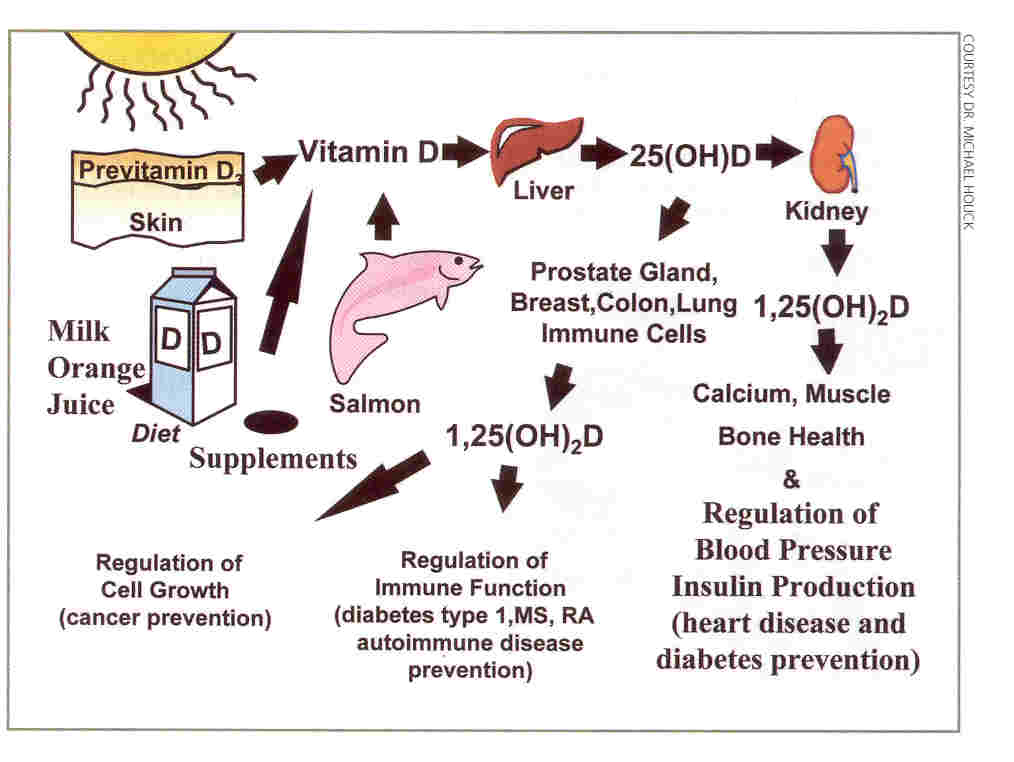
Sunlight is composed of electromagnetic radiation of varying wavelengths, ranging from the long-wavelength infrared light to the short-wavelength ultraviolet. The ultraviolet light is further subdivided into UVA and the even shorter-wavelength UVB radiation. Although UVB causes sunburns, it is also the component that initiates Vitamin-D production in the skin. As such, scientists now believe that past sunscreen use actually promoted skin damage, while, at the same time, blocking beneficial vitamin-D production. (Sunscreen reduces the skin’s ability to produce vitamin D by at least 95%.)
Click To Enlarge
The process by which vitamin D is produced and exerts its biological effects is complicated, involving several vitamin-D-related molecules. Basically, UVB light triggers a modification of a cholesterol-related molecule located in the membrane of skin cells. The vitamin D that is created is then ejected from the membrane into our circulation system, where it travels to the liver. In this organ, it is transformed into 25-hydroxyvitamin D, the derivative that doctors use to assess overall vitamin-D status.
The kidney, as well as some other tissues, further converts this precursor into 1,25-hydroxyvitamin D, the most physiological active vitamin-D metabolite, which is also called calcitrol. Traditionally, calcitrol is understood as a hormone that, together with parathyroid hormone, regulates blood calcium levels and, in turn, bone density. In this role, calcitrol targets the intestine, where it promotes calcium absorption; and bone, where it catalyzes calcium release to help restore depleted blood calcium levels.
However, recent studies indicate that viewing calcitrol just in this role is quite limited. In fact, the hormone exerts a plethora of biological effects on diverse tissues, implying that this sunlight-generated hormone sustains health throughout the body.
Although much remains to be understood, basically, circulating calcitrol enters cells and complexes with the genes in the cell nucleus. This affects DNA expression and, in turn, overall cell functioning and growth. Because calcitrol maintains normal cell proliferation, it inhibits cancerous growth. In addition, calcitrol influences immune-cell activity, helping to explain vitamin D’s seemingly beneficial role in infectious disease and immune-related disorders, such as multiple sclerosis, rheumatoid arthritis, and diabetes.
Given these considerations, the implications of preventing vitamin-D deficiency, either through sunlight or diet, are now more profound than ever.
Monday, February 16, 2009
Digestive Enzyme Deficiency and Antacid Medications
Constipation, indigestion, heartburn, irregularity, bloating, gas, intestinal and gastric discomfort are maladies prevalent in our present society. These are usually the symptoms of a fundamental digestive enzyme deficiency that's easily and often overlooked. Our culture has become far too dependent on antacid medications and other pharmaceuticals to treat these symptoms. Drugs have their place in emergency situations, but there are also natural ways to treat if not cure disease. It would seem that the medical community, at large, is more concerned with the treatment of symptoms than the elimination of disease itself.
At our body's most basic level of function, enzymes play an essential and critical role. Because enzymes must be present before any chemical reaction can take place, our bodies cannot exist without enzymes. We can eat a healthy diet and take all the vitamins, minerals, and hormones we want, but without the proper amount of enzymes, our bodies are incapable of breaking down, absorbing, and using the important nutrients. In many cases the excellent ( and costly) supplements we take simply pass through our systems whole and intact, without being used. Dr. DicQie Fuller, author of The Healing Power of Enzymes
, states the importance of proper digestion is mind boggling. Every function must be perfectly synchronized with every other function. When we lack a particular enzyme, vitamin, or mineral, the resulting imbalance causes disease. If you have digestive problems, you will have trouble rebuilding cells...which leads to an array of health disorders. You may think it is too simplistic to conclude that illness is caused by inadequate digestion, but I am convinced this is true.
What role do digestive enzymes play?
Digestive enzymes function as catalyst agents in our body's digestive process that enable us to experience good health. Proper digestion requires four major and three minor enzymes:
Amylase for the digestion of carbohydrates and starches. Improper digestion creates gas and discomfort.
Protease for the digestion of proteins. Improper digestion causes indigestion and toxicity.
Lipase for the digestion of fats; also assists in balancing fatty acids. Improper digestion creates pungent odors and poor cholesterol balance.
Cellulase for the digestion of cellulose (fiber found in vegetables and other plant materials). Improper digestion leaves wax like residue in the small intestines, contributing to absorption problems.
Lactase for the digestion of milk sugar lactose. Improper digestion prevents the breakdown of lactose resulting in digestive problems and lactose-related allergies.
Sucrase and Maltese lesser known enzymes that break down food sugars.
How does my body obtain enzymes?
Enzymes are energized protein molecules that, in a perfect world, can be obtained in two ways: Our bodies make them (metabolic enzymes) or we get them through the food we eat (food enzymes). When these two natural sources are compromised, we can obtain the enzymes we need through supplementation.
What could cause a digestive enzyme deficiency in my body?
Age and high stress negatively impact our body's ability to produce metabolic or endogenous enzymes. The older we get, the less efficient our bodies become in producing enzymes. An older adult simply does not manufacture as many enzymes as a young person. When were under a lot of stress and run down, our bodies require a substantially larger amount of enzymes.
Food or exogenous enzymes exists in food that's in its raw state. However the cooking, freezing, and food manufacturing and altering processes destroy food enzymes. So while your taste buds are satisfied, the rest of your body, particularly your digestive system, is not getting what it needs. Unless you are a child who eats only raw foods, you are at risk of being enzyme deficient.
What are supplemental digestive enzymes?
Supplemental digestive enzymes can be either plant or animal-derived.
Generally, plant enzymes are most useful because of they aid digestion throughout the entire digestive process. These enzymes cannot be made like synthetic vitamins and minerals, and must be grown in plant form and extracted through a laboratory process.
Dr. Peter Rothchild, M.D. a world-renowned researcher and Nobel Prize nominee in physics writes, Evidence of the effectiveness of enzymes taken orally is beginning to overcome skeptism. Many of these studies show enzymes, when taken orally, demonstrate benefits against circulating immune complexes, rheumatic disorders, and acute immune disease.
Why the lack of publicized information about digestive enzymes?
Dr. DicQie Fuller explains, Although enzyme biochemistry has been the subject of intensive study, the role of enzymes in supplementation and therapy is not widespread knowledge. There are not yet enough knowledgeable people around to supply the necessary information. Yet the healing power of enzymes has been documented for decades.
How do I know if I have a digestive enzyme deficiency?
Symptoms of poor digestion are good indicators: burps and belches, excessive gas, heartburn, nausea, constipation, feeling tired after eating, or an allergic reaction to particular foods. Also, certain food cravings or foods you eat the most such as caffeine, chocolate, refined sugars, and cooked and processed foods could be clues to an enzyme-related problem.
Are there products available that contain essential digestive enzymes?
In addition to digestive enzymes in supplement forms (pills and capsules), a small number of nutritional supplement companies offer products that are formulated to contain and provide essential enzymes.
How can I find out more about enzymes and related topics?
A good starting point is Dr. Fullers book: The Healing Power of Enzymes
Adapted from The Healing Power of Enzymes
Sunday, February 15, 2009
What is Choline Bitartrate?
Choline bitartrate is an essential nutrients needed by the nervous system to produce
acetylcholine. Acetylcholine is a neurotransmitter that facilitates the transmission of impulses between neurons. Choline is extremely important in maintaining healthy cell membranes because it produces phosphatidyl choline. It helps in the production of lipotropic agents which inhibit the conversion of carbohydrates to fat and assists in the production of HDL (good) cholesterol. Choline is very helpful in hormone production and in enhancing sexual function, as well as bladder, kidney, pancreatic, testicular, and liver function.
WHY DO WE NEED CHOLINE BITARTRATE?
There are two reasons for the body’s need for choline - classified as an essential
nutrient in 1998 by the National Academy of Sciences. Number one, choline is required for the synthesis of one of our body’s primary neurotransmitters, acetylcholine. Number two, it is used for the building and maintenance of the body’s
membranes. Acetylcholine is vital for thought, memory and sleep, and is also involved in the control of movement. The sympathetic and parasympathetic nervous systems are the main driver of the liver, pancreas and adrenal/testicular
functions, and are the major regulators of the cardiovascular functions. Uptake of circulating choline decreases with age and choline is essential for nerve structure and function. FACT: Acetylcholine is a type of compound known as a neurotransmitter. These are chemicals are stored in nerve cells and are involved in transmitting messages between the nerve cells and muscle cells. Acetylcholine is found in nerve
endings and is constantly being manufactured and broken down by the body.
CAN WE RECEIVE ENOUGH CHOLINE THROUGH DIET ALONE?
Though choline can be manufactured internally from amino acids methionine and serine, it has been designated an essential nutrient, meaning that it is required by the body but not made in adequate amounts, so we need to get it in
our diet. Choline is available in a number of foods, including eggs, fish, legumes, nuts, meats and vegetables- even human breast milk. It is important to supplement our diets with choline since the production of acetylcholine
decreases with age. The importance of choline was demonstrated in a study in 1998 by Steven Zeisel from the Department of Nutrition at the University of North Carolina, Chapel Hill. In this study, volunteers on a choline deficient diet were not able to produce enough acetylcholine.
WHAT IF THE BRAIN DOES NOT RECEIVE ENOUGH CHOLINE TO MANUFACTURE ACETYLCHOLINE?
When the neurons do not receive sufficient choline to manufacture acetylcholine they may resort to extracting choline out of the nerve cell membranes, in a process called auto-cannibalism. In the short run, this process provides the
body with enough choline to produce just enough acetylcholine to keep neurotransmission and other nervous system functions going. In the long run, however, the nerve cells become increasingly damaged as neural cell membranes
grow rigid and more and more dysfunctional.
HOW DOES CHOLINE AFFECT SLEEP?
One of the lesser known functions of acetylcholine is helping to maintain sleep. Acetylcholine controls sensory input, and strengthens the “stimulus barrier,” making it possible to sleep through minor noises and other disturbances. As we age, we tend to become light sleepers, and Choline Bitartrate and Melatonin can help regulate sleep patterns. The same stimulus barrier also helps us concentrate and solve problems. Too little acetylcholine can lead to irritability and a lack of focus as too many unimportant stimuli bombard us, preventing us from thinking clearly.
HOW DOES CHOLINE AFFECT THE BLADDER?:
The bladder is a muscle which is under cholinergic control. Acetylcholine stimulates a type of receptor in the body called a muscarinic receptor. Stimulation of the muscarinic receptors in muscles leads to a contraction of the muscle. Acetylcholine stimulates the muscle contractions of the bladder and supports healthy urinary function.
HOW DOES CHOLINE AFFECT CHOLESTEROL LEVELS IN THE BODY:
Choline helps emulsify fat, keeping it in liquid form and suspension. As long as cholesterol is emulsified, it isn’t likely to settle in the arterial walls. Choline helps transport cholesterol and fats so they can be used by the body or excreted
to maintain healthy cholesterol levels already in the normal range. Strenuous exercise, such as marathon running, can dramatically lower your body’s levels of choline. The reason may be due to the need for choline in the metabolism of
fats, which increases during exercise.
WHAT IS CHOLINE’S IMPACT ON THE LIVER:
Choline bitartrate helps prevent fats from accumulating in the liver and is essential for its health, and also the health of the kidneys. Choline is involved in fat metabolism and in the transport of fats from the liver.
LIBIDO EFFECTS OF CHOLINE:
Choline is a nutrient that potentially enhances sexuality through its conversion to acetylcholine. The sympathetic and parasympathetic nerves are the main driver of testicular functions - and can help stimulate the libido.
WHAT IS CHOLINE’S IMPACT ON FETAL DEVELOPMENT AND NEWBORNS:
Pre-natal choline supplementation is thought to result in enhanced nervous system development and cognitive function throughout development and infancy, as newborns require large amounts of choline for development. Choline is supplied in mother’s milk, but the amount of choline in breast milk is directly related to the amount of choline that she consumes in her diet.
Wednesday, February 11, 2009
A Liver Health Diet Is The Key To Longevity
The liver is the largest internal organ in the body, the liver is located in the upper right portion of the abdomen, beneath the diaphragm and above most of the stomach, intestines and pancreas. The liver has many functions, including secreting bile, neutralizing poisons, synthesizing proteins, and storing glycogen and certain vitamins and minerals. the largest organ in the body, producing many essential chemicals and regulating the levels of most vital substances in the blood. Some important functions of the Liver are: to allow the Qi to flow smoothly throughout the body and to ‘store’ the Blood. Over 5 million Americans have hepatitis B or C, resulting in an estimated 13,000 to 15,000 deaths annually.

Ways to Love Your Liver Health:
1. Avoid taking unnecessary medications (Too many chemicals can harm me).
2. Don't mix medicines without the advice of a doctor. (You could create something poisonous that could damage me badly)
3. Street drugs cause serious damage and scar me permanently.
4. Don't drown me in beer, liquor or wine. (If you drink alcohol, have two or fewer drinks per day) .
5. Never mix alcohol with other drugs & medications.
6. Be careful when using aerosol cleaners. I have to detoxify what you breathe in, so when you go on a cleaning binge, make sure the room is well ventilated, or wear a mask.
7. Bug sprays, paint sprays and all those other chemical sprays you use can harm me too. Be careful what you breathe.
8. Watch what gets on your skin! (Those insecticides you put on trees and shrubs to kill bugs can get to me right through your skin and destroy some cells.) Remember, they're serious chemicals.
TROUBLE SIGNS:
Here are some signs of liver trouble. If you experience anyof these symptoms, please contact your doctor.
1. Yellow discoloration of the skin or eyes.
2. Abdominal swelling or severe abdominal pain.
3. Prolonged itching of the skin.
4. Very dark urine or pale stools-, or the passage of bloody or tar-like stools.
5. Chronic fatigue, nausea or loss of appetite.
Eat for Health: Since everything we eat must pass through the liver, special attention to nutrition and diet can help keep me healthy. Here are some tips on eating for health healthy liver, healthy you.
1-Eat a well balanced, nutritionally adequate diet: if you enjoy foods from each of the four food groups, you will probably obtain the nutrients you need.
2-Cut down on the amount of deep-fried and fatty foods you and your family consume. Doctors believe that the risk of gallbladder disorders (including gallstones, a liver-related disease) can be reduced by avoiding high-fat and high cholesterol foods.
3-Minimize your consumption of smoked, cured and salted foods. Taste your food before adding salt! Or try alternative
seasonings in your cooking such as lemon juice, onion, vinegar, garlic, pepper, mustard, cloves, sage or thyme.
MEAT, FISH, POULTRY & ALTERNATIVES PROVIDE:
protein, vitamin A, iron, vitamin B12, niacin, fiber, thiamin
WHOLE GRAIN BREADS AND CEREALS PROVIDE:
carbohydrates, niacin, thiamin, iron, riboflavin, fiber
FRESH FRUITS AND VEGETABLES PROVIDE:
vitamin A, vitamin C, iron, fiber, folacin
MILK AND MILK PRODUCTS PROVIDE:
calcium, riboflavin, niacin,folacin, vitamin A, vitamin B12, vitamin D.
Liver Function Tests:The most commonly used way to check for liver problems these blood tests look for chemicals in the body that are produced when the liver does its various jobs. The tests can be used to diagnose and monitor chronic viral hepatitis as well as other liver diseases. The two most common tests include the following liver enzymes. Blood tests to measure the function of the liver. These are blood tests that are ordered regularly by liver doctors. They give an indication of how well the liver is working and help sort out the type of problem that may be present. They are done daily immediately following transplantation. Abnormalities can indicate rejection, infection, side effects from drugs and many other things. Experience is required to determine what the results mean.
Liver Enzymes:Proteins that catalyze chemical reactions needed for bodily functions. Levels of certain enzymes, such as ALT and AST are higher when the liver is injured, as they leak into the bloodstream when the cell is injured or destroyed. proteins that catalyze chemical reactions needed for bodily functions. Levels of certain enzymes, such as ALT and AST are higher when the liver is injured, as they leak into the bloodstream when the cell is injured or destroyed.
Fatty Liver:Fatty liver or steatosis hepatis is a reversible condition seen in chronic alcoholism and many other conditions, where large vacuoles of lipid accumulate in hepatocytes (the cells of the liver). Accumulation of fat in liver cells will cause the liver to enlarge. The lipid within the vacuoles is a particular type of lipid known as triglyceride. Triglyceride molecules consist of a glyerol backbone with three fatty acid molecules joined on.
Liver failure:The final stage of liver disease, in which liver function becomes so impaired that other areas of the body are affected, most commonly the brain. Liver failure is the final stage of liver disease. By definition, liver failure occurs when the liver is so diseased, and functioning so poorly, that encephalopathy is evident. Any progressive liver disease can result in liver failure examples include: acetaminophen toxicity, liver cirrhosis, viral hepatitis, and metastatic cancer of the liver.
Liver Cancer:A disease in which malignant (cancer) cells are found in the tissues of the liver. Hepatocellular carcinoma (HCC, also called hepatoma) is a primary malignancy (cancer) of the liver. Most cases are secondary to either hepatitis infection (usually hepatitis B or C) or cirrhosis (alcoholism being the most common cause of hepatic cirrhosis).
Enzymatic Therapy-Super Milk Thistle
 An all-natural herbal tonic for everyday liver + health Features guaranteed-potency milk thistle + extract standardized to 80% silymarin content Fortified with dandelion root, artichoke, and + licorice root extract Super Milk Thistle 120 Sgels Enzymatic Therapy.
